UQ coursework · 2025 – 2026
Selected coursework
Nine pieces of coursework from my degree at UQ, newest first. Each says whether it was mine alone or a team effort, and what my part was.
- Courses
- AERO4450, AERO4470, METR6203, METR4202, METR4201, METR3100, ELEC4630, MATE7015
- When
- 2025 – 2026
- Tools
- Python, MATLAB and Simulink, ROS 2, fastai, Fusion 360
 AERO4450 · 2026Scramjet cycle with nitrous augmentationPart 1 on my own, final report in a team of 2
 AERO4470 · 2026Reflected shock tunnel analysismy own report on shots taken for our class group
 AERO4450 · 2026Cold gas thruster against nozzle theorylab in a group of 8
 MATE7015 · Sep – Oct 2026Titanium crank arm for metal 3D printingon my own
 METR6203 · 2025Control design for three rigstwo team assignments and one on my own
 METR4202 · 2025Autonomous exploration and marker searchteam of 4
 METR4201 · 2025Furuta pendulum balance controlleron my own, in simulation
 METR3100 · 2025Functional safety case for a LiDAR checkteam of 5; I did the analysis and wrote the report
 ELEC4630 · 2025Road signs and rice leaf diseaseon my own
The full write-up
Scramjet cycle with nitrous augmentation
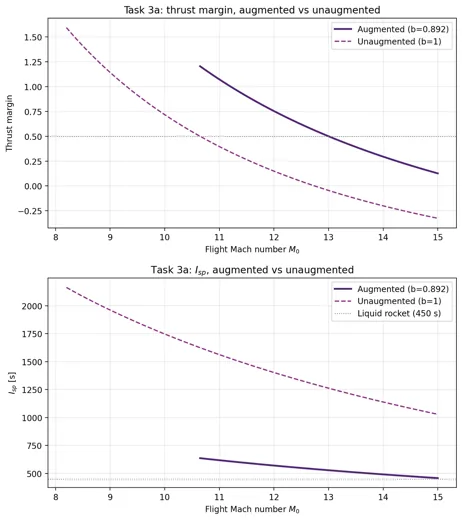
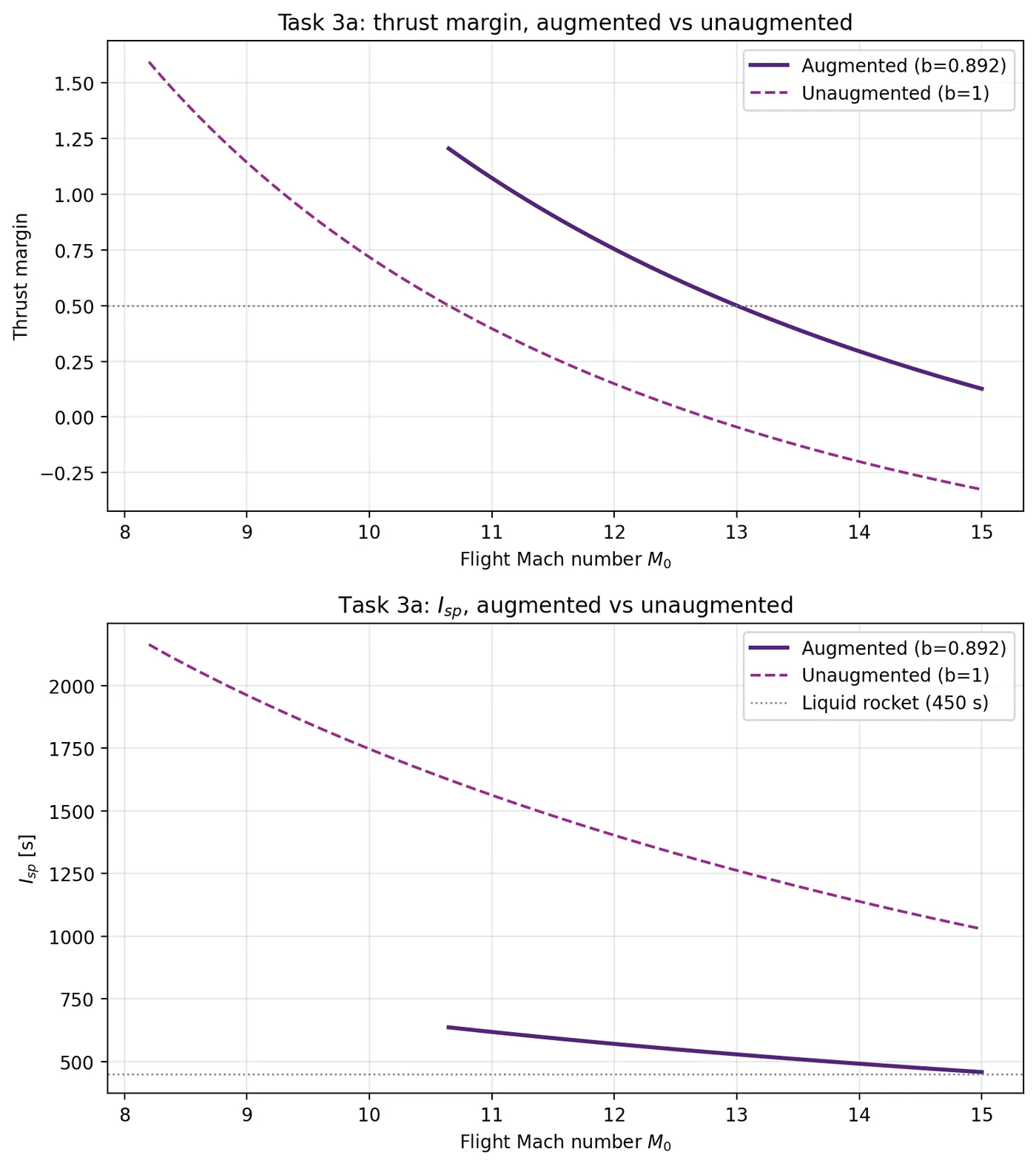
A 1-D cycle analysis of a scramjet that burns part of its hydrogen with on-board nitrous oxide to keep thrust up at higher Mach numbers. The combustion part was mine alone: in Python I worked out the heat release of hydrogen burning with nitrous oxide, 164.6 MJ/kg. For the final report, where I did most of the work, we built the cycle model and matched the lecture's Mach 10 example to within 7.2% on thrust. Without nitrous the critical Mach number was 10.65; at Mach 13, burning about 11% of the hydrogen with nitrous oxide restored the brief's 0.5 thrust margin. It is a simulation of a fictional scenario.
Reflected shock tunnel analysis
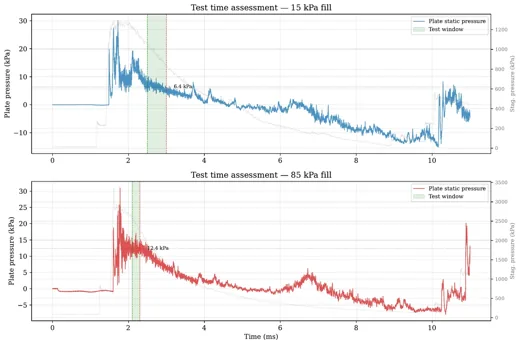
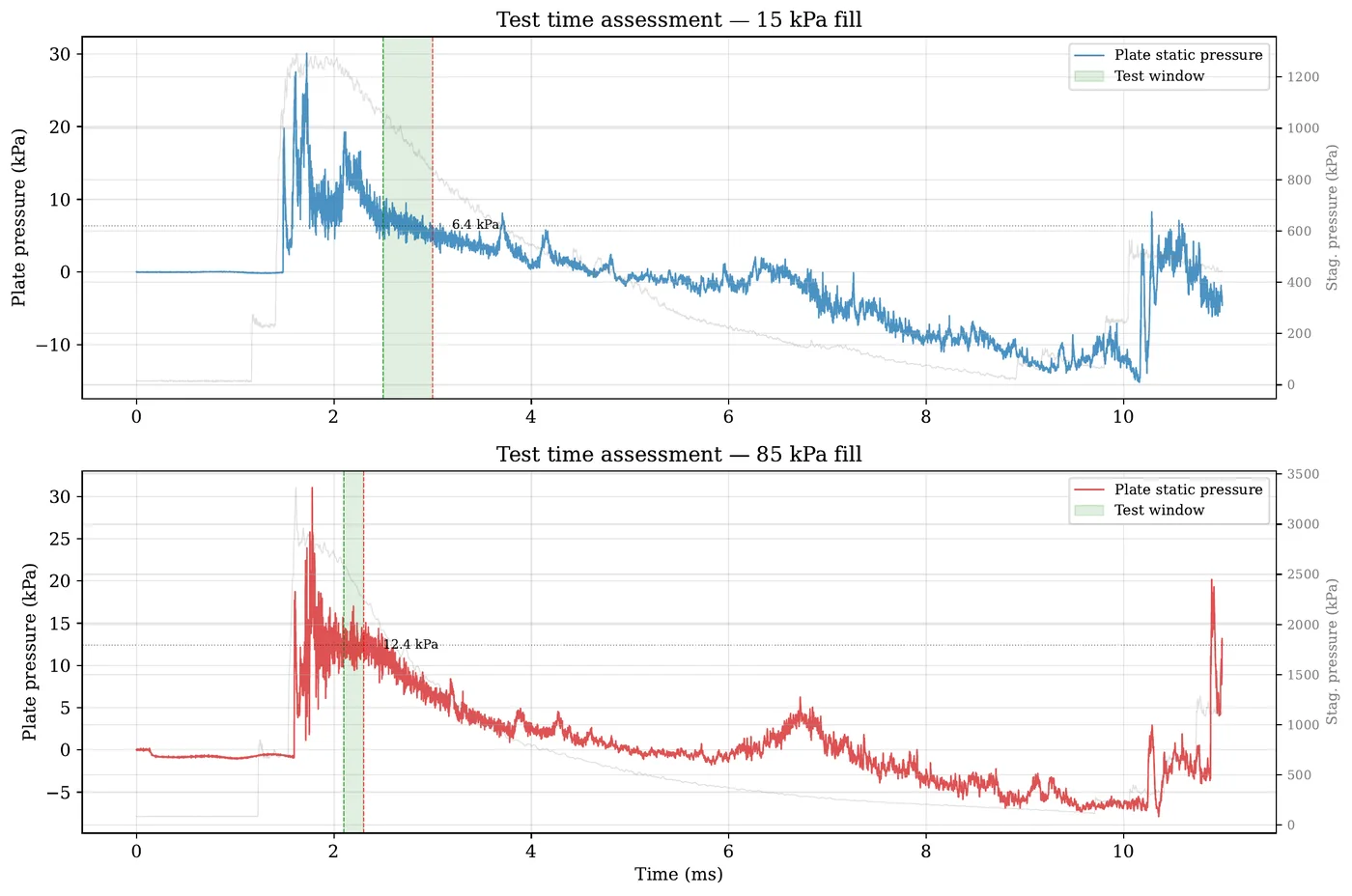
An analysis of shots taken for our class group in UQ's Drummond reflected shock tunnel with a Mach 7 nozzle, at fills of 15 and 85 kPa. In Python I calibrated the wall pressure transducers in place, detected shock arrival automatically and measured shock Mach numbers of 3.676 ± 0.088 and 2.671 ± 0.047, carrying the uncertainty through every step. The measured plate pressures, 6.39 ± 1.15 and 12.39 ± 1.36 kPa, sat within one standard deviation of both the equilibrium and the calorically perfect predictions.
Cold gas thruster against nozzle theory
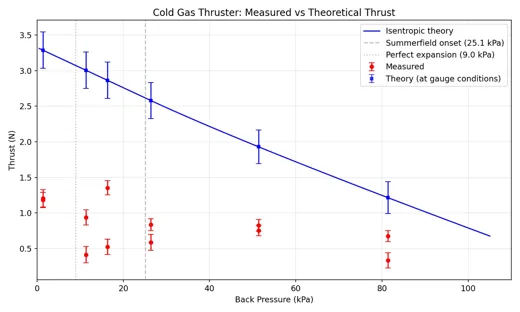
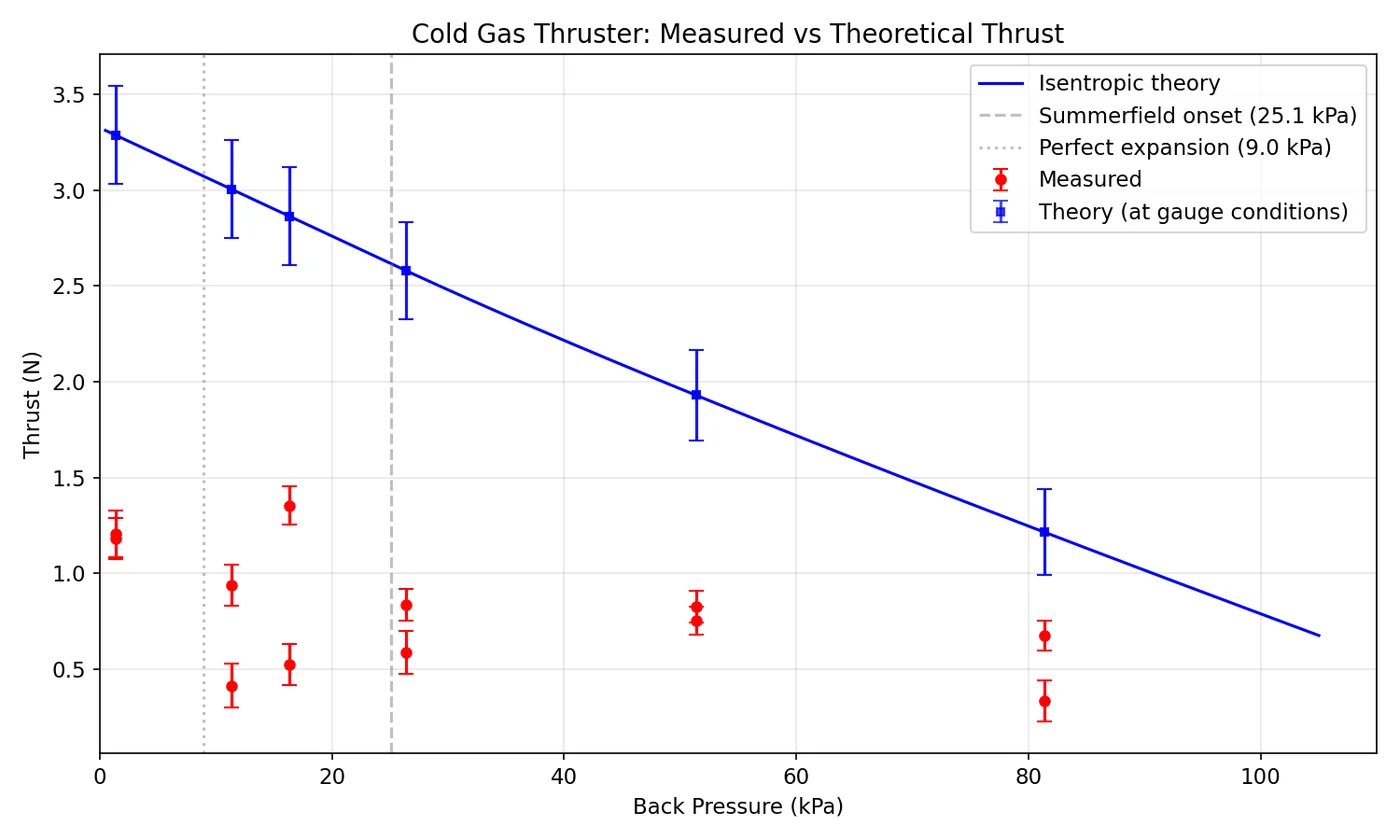
Firing a small cold gas thruster into back pressures from 1.35 to 81.35 kPa and comparing its thrust with isentropic nozzle theory, using the Summerfield criterion for flow separation. I did most of the analysis and wrote the notebook behind every figure and table, including the thrust-stand calibration (R² 0.995). Measured thrust ran 44 to 86% below theory, and repeat firings scattered by up to 0.8 N, more than the instrument uncertainty.
Titanium crank arm for metal 3D printing
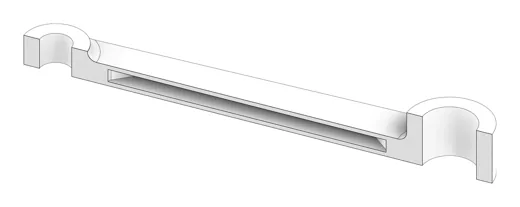
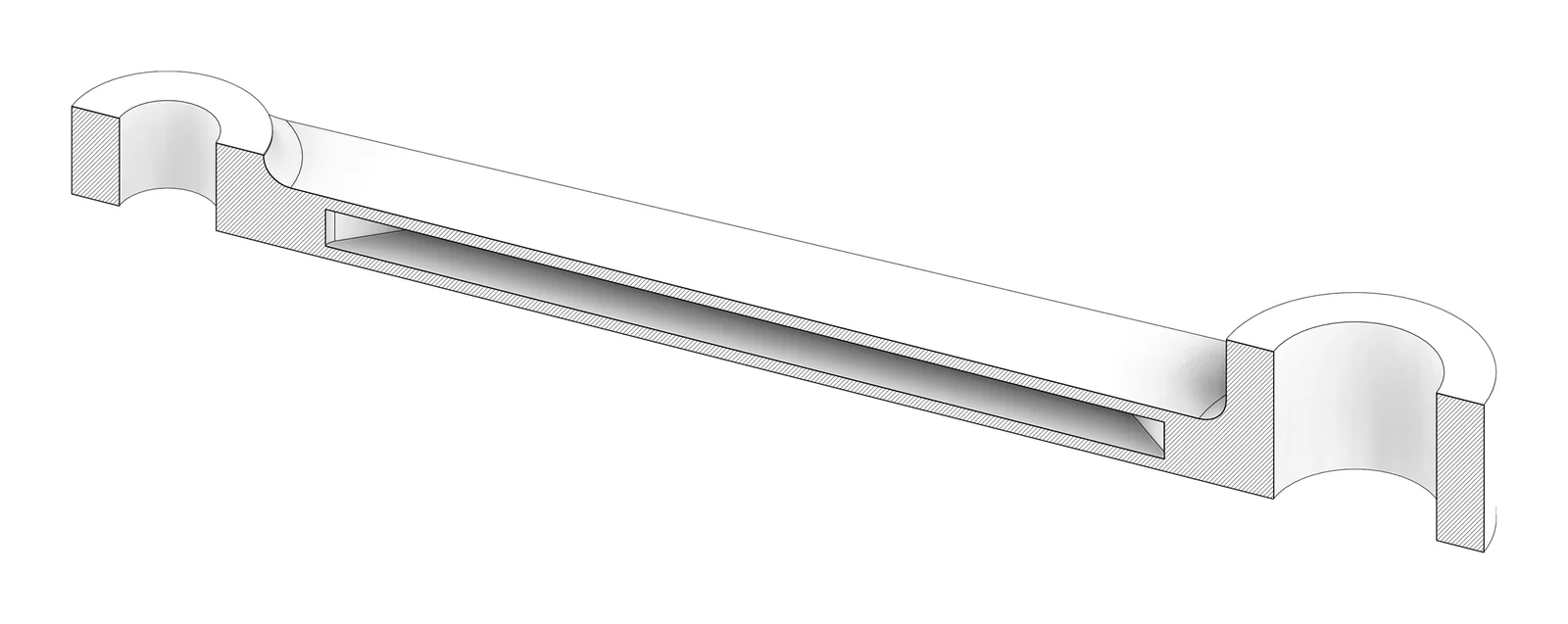
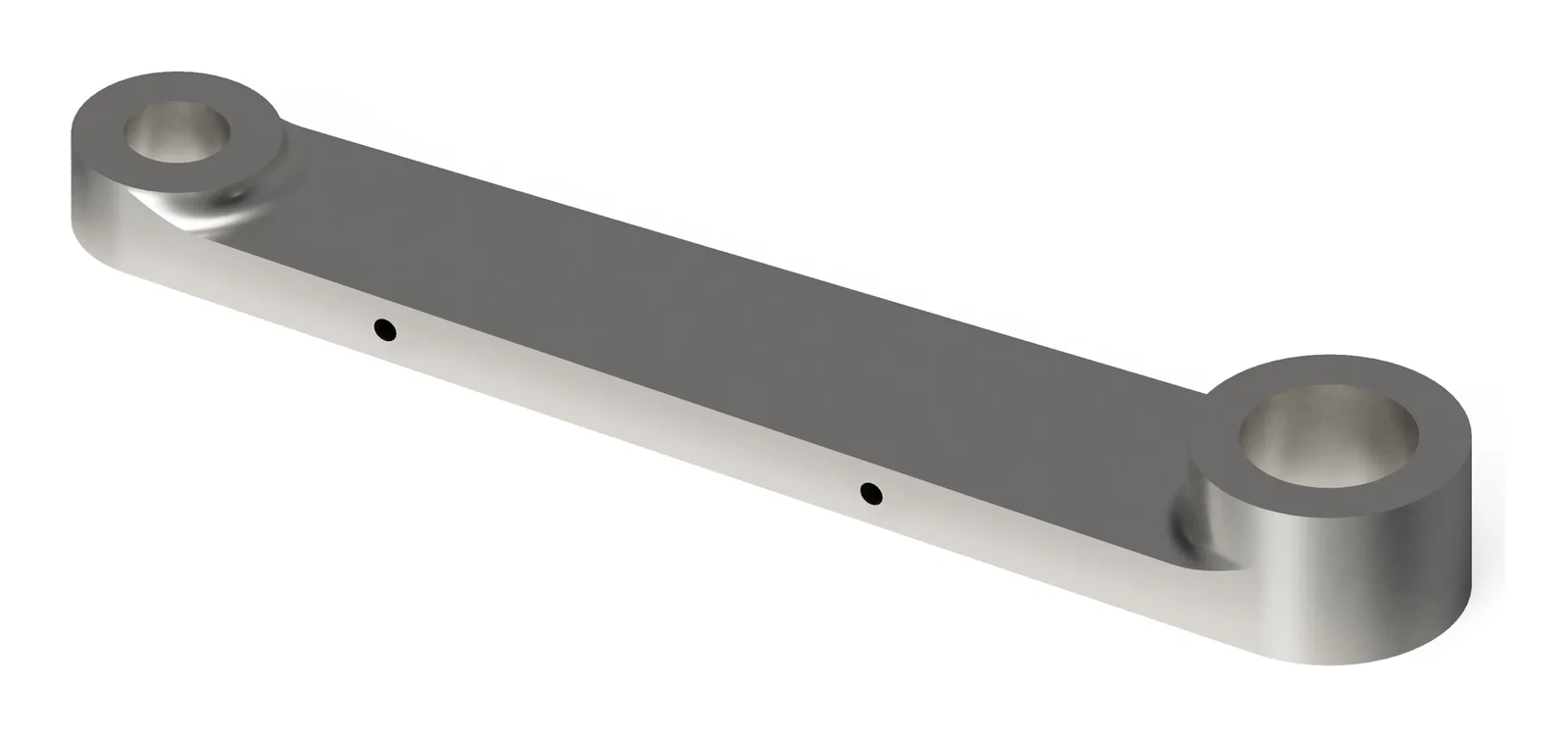
A left bicycle crank arm in Ti-6Al-4V that I designed in Fusion 360 for laser powder bed fusion. At the 1800 N test load my static study peaks at 408 MPa, a safety factor of 2.11, and the arm weighs 251.4 g, 21% lighter than my solid starting design. It is a design only: the titanium arm has not been built.
Crank arms are usually forged, so every length needs its own dies. Printed in titanium, crank length could be a single model parameter, so a rider with a leg-length difference could get a custom arm, if the design suits the process.
- Crank length is one parameter of the model.
- The arm is hollow and needs no supports inside: a closed internal cavity with 2 mm skins and ends 50° above horizontal, so the arm builds upright from the bottom bracket boss with no supports inside it. I chose the process partly for its fine resolution, which the thin skins need.
- Two 3.5 mm holes let the unfused powder out. My first holes, in the top skin, raised the peak stress to 591 MPa, so I moved them to the side wall.
- In my static study, at the 1800 N fatigue test load from BS EN ISO 4210-8, the peak von Mises stress is 408 MPa, a safety factor of 2.11 on the 860 MPa heat-treated minimum yield.
- I printed 3 full-size ASA prototypes of earlier versions on my own printer. A 98.7% shrinkage setting brought the last one's bores within 0.3% of the CAD.
- Over my weight target: at 251.4 g the arm is 76 g heavier than my stretch target, the 175 g Shimano arm.
- Not built or tested: the titanium arm exists only as a design and a static study; no fatigue test has been run.
Control design for three rigs
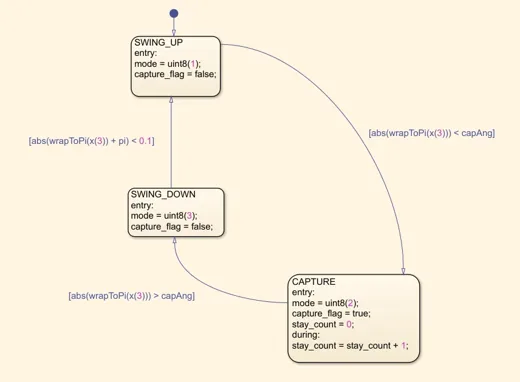
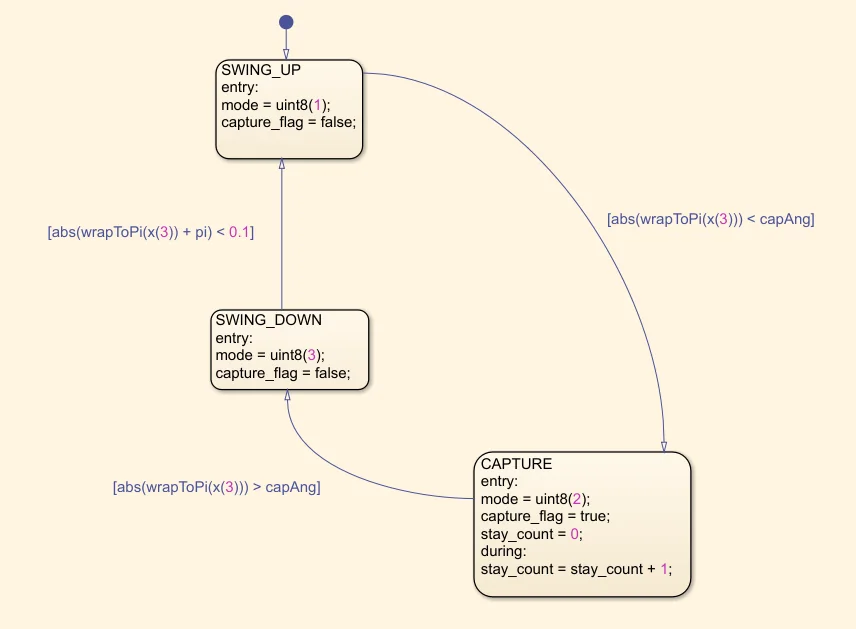
On a gyro-actuated inverted pendulum I was responsible for the MATLAB and Simulink model, the LQR capture controller and integration, with Stateflow switching between an energy-based swing-up and balance. In simulation it swung up in about 1.1 s and was caught, but we ran out of time to get the swing-up working on the rig. On a Quanser 3-DOF helicopter I built the linearised hover model and the Simulink model that joins the observer, controller and plant, and the controller flew under joystick control. On my own, I designed a state feedback controller and observer for a linearised Whipple bicycle; in simulation its step response overshot by 3.4%.
Autonomous exploration and marker search
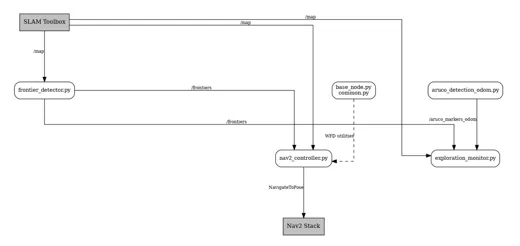
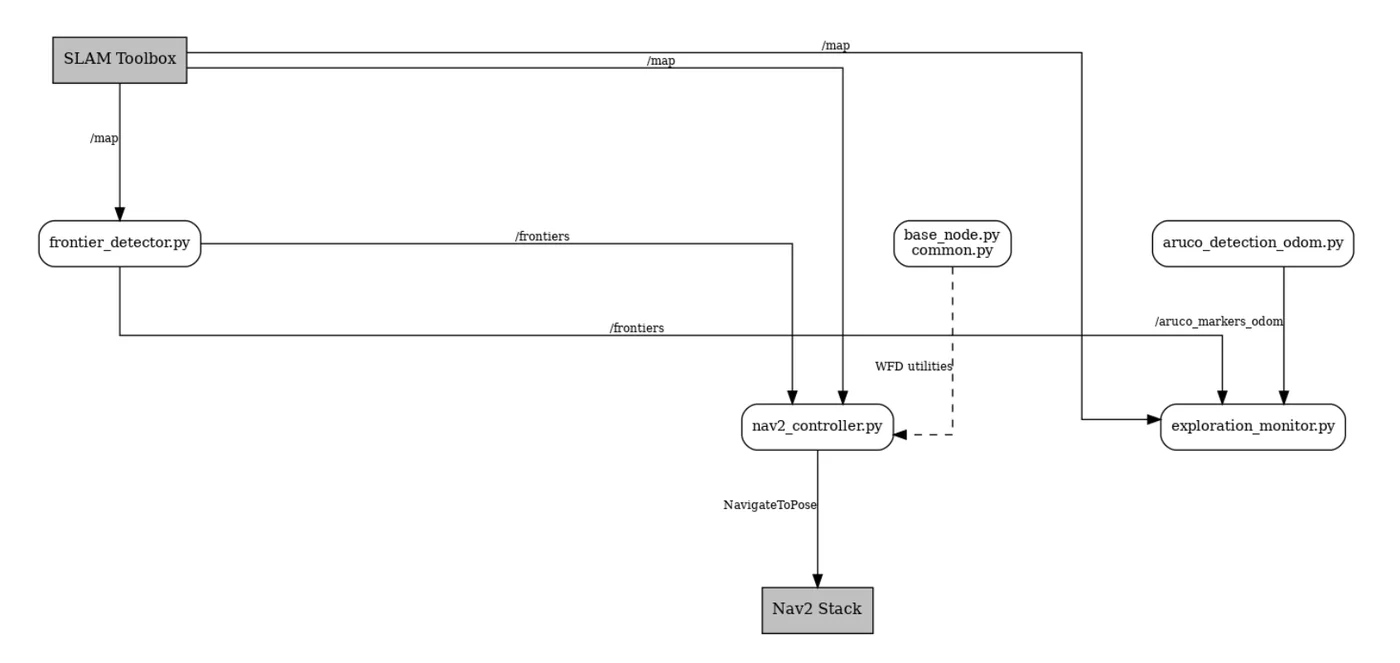
A TurtleBot3 had to explore a map it had never seen and find the ArUco markers placed around it, with nobody driving. It maps with SLAM Toolbox and drives with Nav2. As the team's integration lead I wrote the exploration and recovery side: a frontier detector that scores each frontier by how much unknown space a ray cast says it would reveal, goal ranking and blacklisting, stuck detection with recovery, and a coverage monitor. I made 81 of the team's 101 commits.
Furuta pendulum balance controller
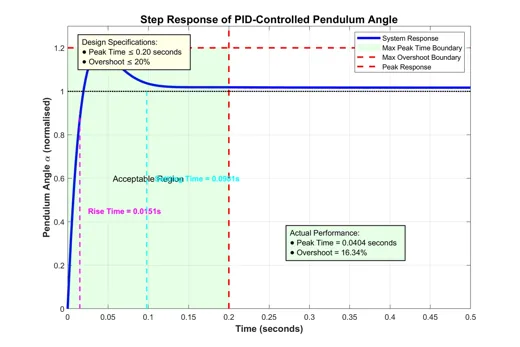
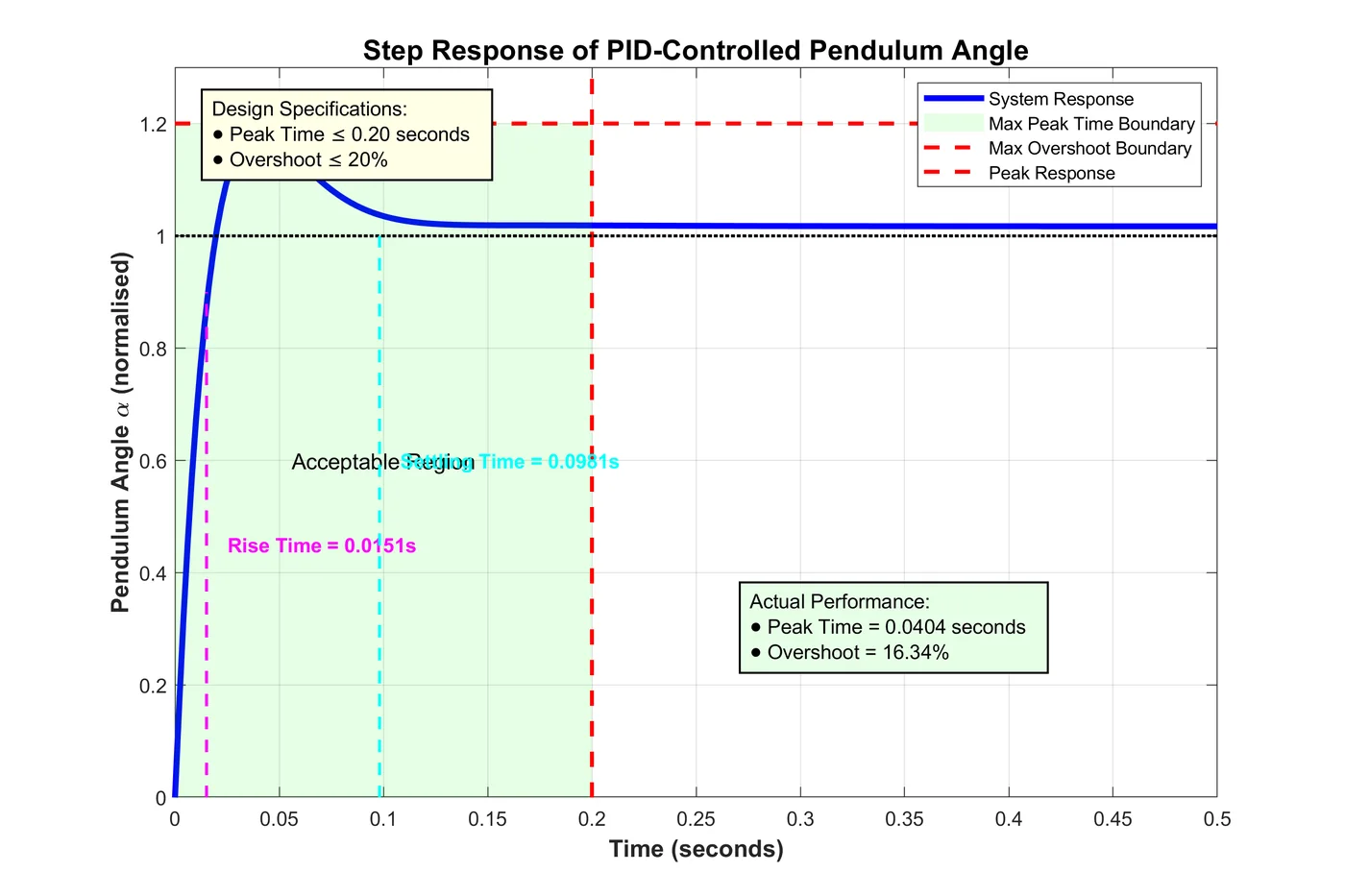
Balancing an inverted pendulum on a motor-driven rotating arm. I derived the motor and gearbox model by hand, checked it in MATLAB, and placed a PID controller's zeros on the root locus. In simulation it met the brief's limits of 0.2 s peak time and 20% overshoot, with 0.040 s and 16.3%. An outer PD loop with a low-pass filter then held the arm at its set angle with no drift. It is a simulated design, on the course's nonlinear Simulink model rather than the rig.
Functional safety case for a LiDAR check
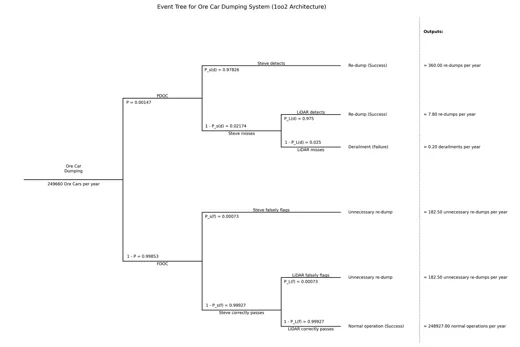
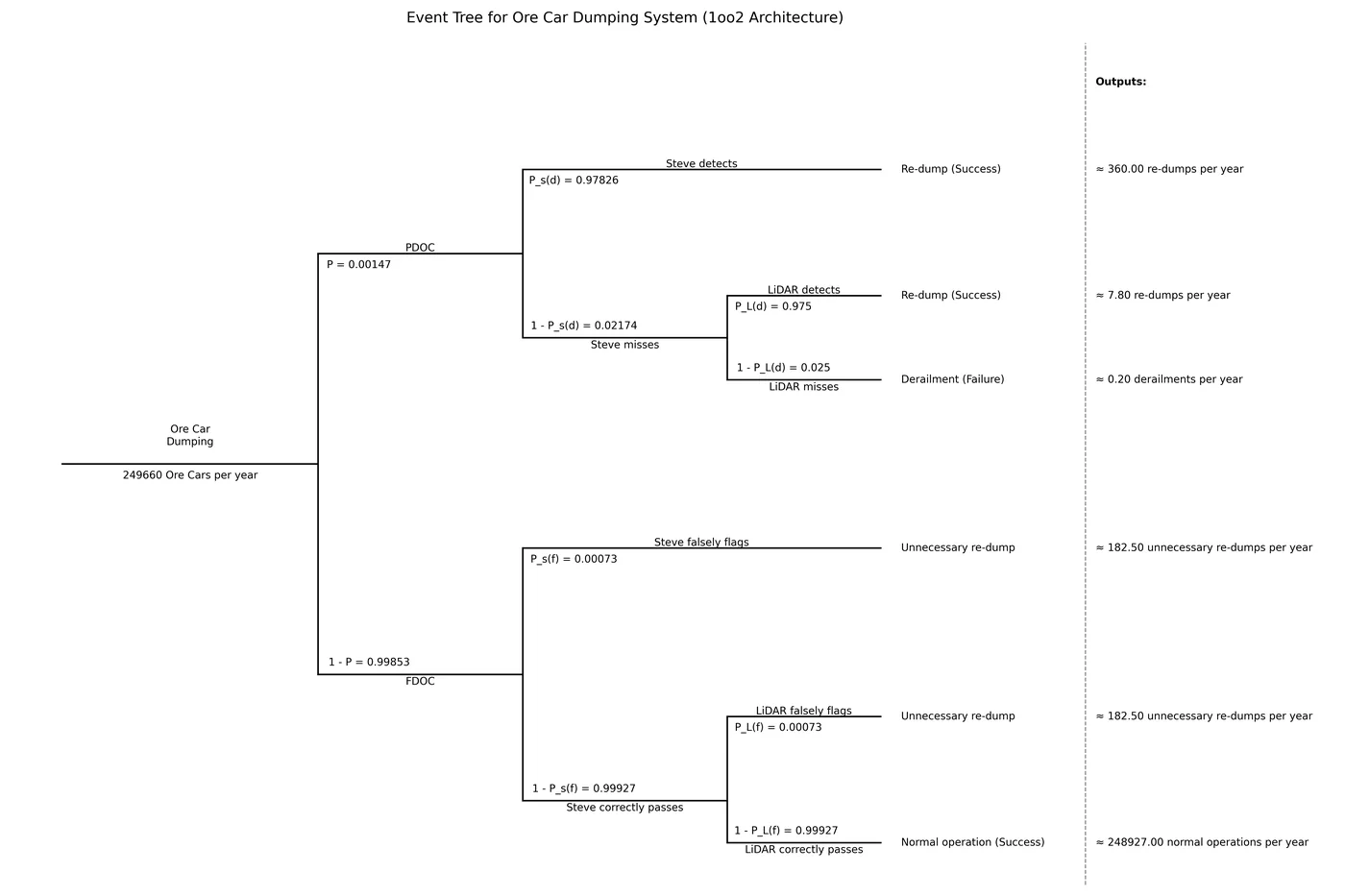
A fictional mine wanted a LiDAR check to catch partly dumped ore cars before they derail. Event trees over 249,660 cars a year showed the human supervisor alone still let 8 derailments a year through, and that the LiDAR needed 97.5% detection with a 0.018% false-flag rate, which is SIL 1. A 1oo2 voting design cut derailments to 0.2 a year but used all 365 unnecessary re-dumps the brief allowed. An STPA found 7 unsafe control actions and 16 loss scenarios, and I recommended a 300 ms command timing limit.
Road signs and rice leaf disease
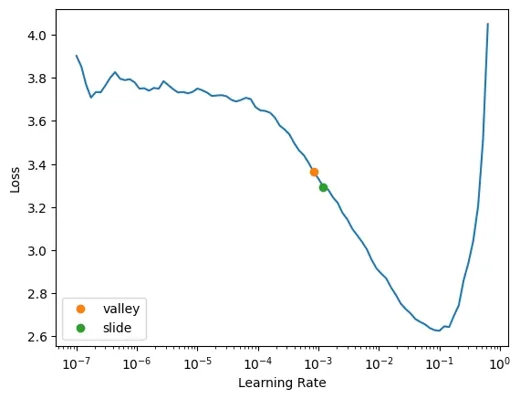
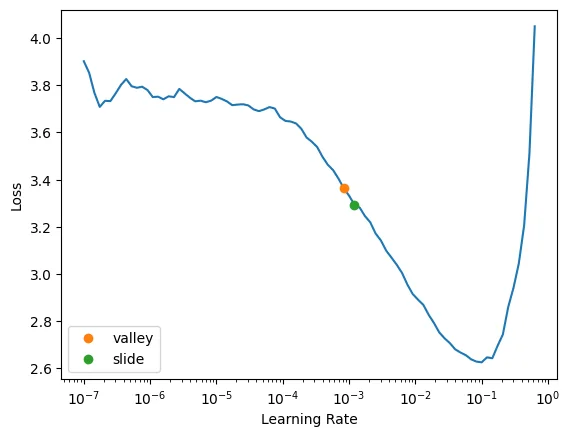
For road signs I built a MATLAB bank of 3,268 templates across 7 sign shapes, found candidates with colour masks and edges, and scored each match on template overlap and chamfer distance; on the course's 10 or so test photos it found the yellow diamond signs more than 90% of the time. On a Kaggle rice leaf disease task in fastai, tuning took a ResNet26d from 88.1% to 97.0%, and my best ConvNeXt Large scored 98.387%, just short of the brief's 98.846% benchmark.
Credits
Team entries say what my part was; the rest was my teammates'. Course briefs, rigs, the shock tunnel and the course models belong to UQ.