First-year team project · 2022
Remote-controlled firefighting vehicle
5 of 6 targets out
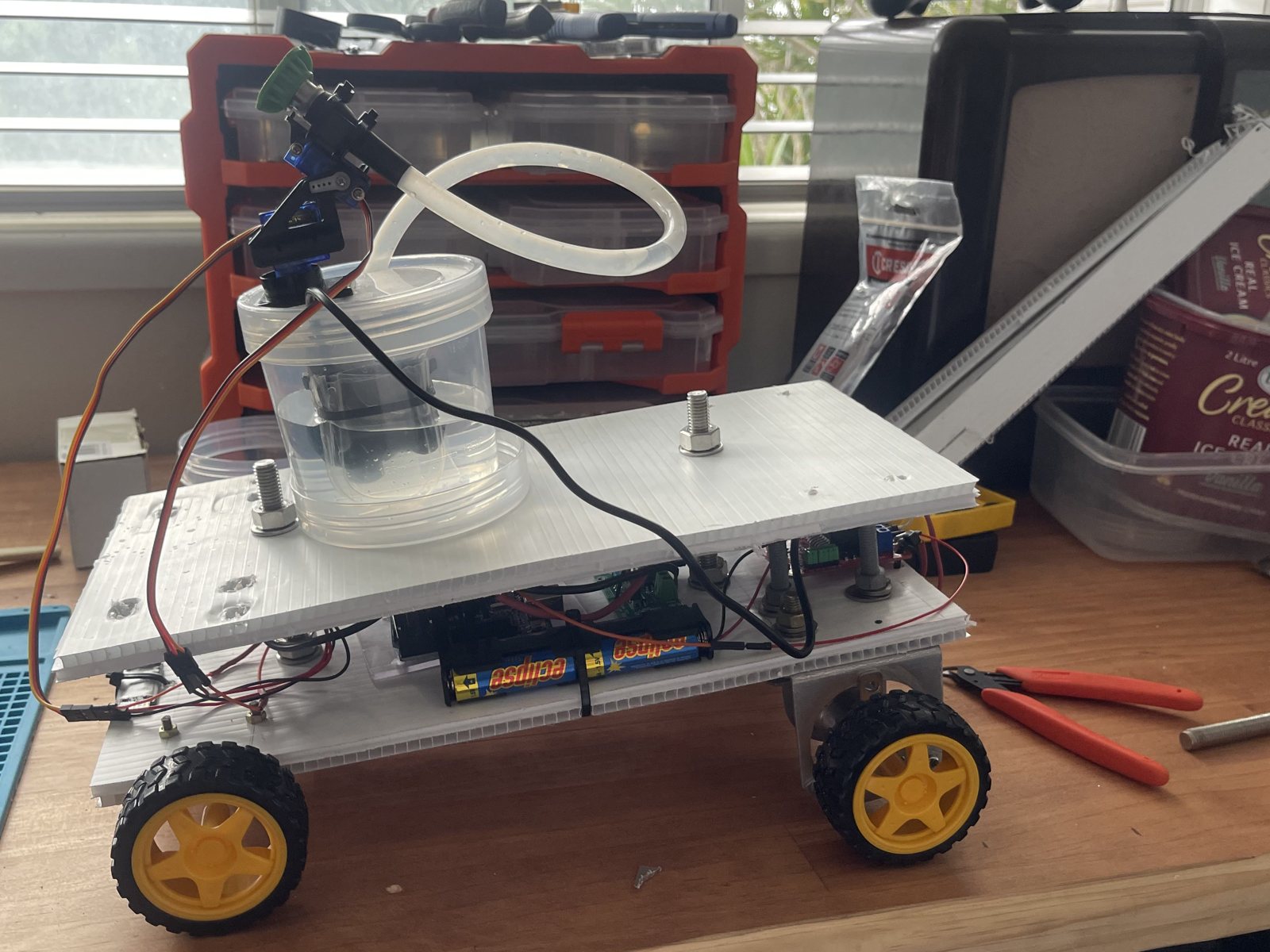
My first-year team build for ENGG1100 Professional Engineering at UQ. At the demonstration we put out 5 of the 6 targets, and the vehicle cost A$140 against a A$200 cap.
- My role
- Team leader, and the only member of the structure subsystem
- Team
- Team of 6
- When
- Feb – Jun 2022
- Tools
- Fusion 360, 3D printing, Arduino, C++
The full write-up
- The problem
- What I did
- What went wrong
- Credits
The problem
Build a small remote-controlled vehicle that drives along a test rig and puts out 6 heat-source targets in a run of no more than 5 minutes, using water it carries on board, under an A$200 budget and a 4 kg mass limit.
What I did
- For the chassis, I compared 3 materials with a weighted decision matrix and chose 5 mm corrugated polypropylene, which the final vehicle used.
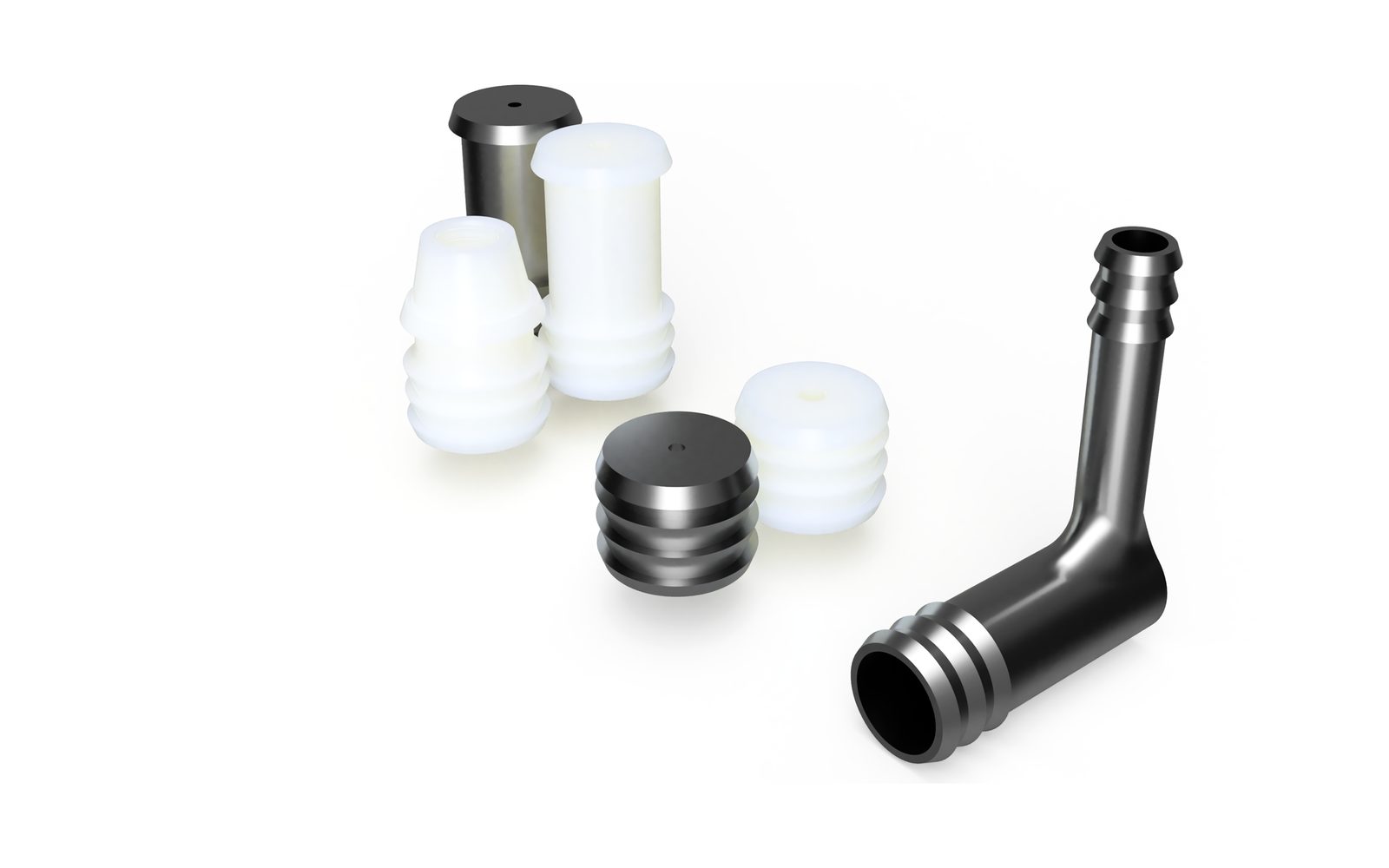
- I designed and 3D printed several versions of the hose nozzle, trading water use against accuracy and pressure.
- To get past the dead electronics, I rebuilt the first prototype on an Arduino, taught myself enough C++ to drive it by remote control, and built the circuit that links power and control to the drive motors.
What went wrong
- Dead electronics: about a week before the milestone the first prototype's motor driver and Pico gave no output, and its back wheels were mounted at different angles.
- Water tank: the 500 mL reservoir could not hold enough water once the pump displaced some of it. Its 1 L replacement cracked when we drilled it.
- Spray: the fish-tank pump gave weak, uneven streams, and the printed nozzle's layer lines hurt the spray.
- On the day: current draw upset one servo, and the pan-and-tilt could not turn a full circle, so we put out 5 of the 6 targets.
- Late parts: the pump and hose arrived about a week late.
Credits
Built by our team of 6. Design decisions went to a group vote.